Contents
Terraform is an infrastructure as code tool that lets you build, change, and version cloud and on-prem resources safely and efficiently.
Terraform can manage low-level components like compute, storage, and networking resources, as well as high-level components like DNS entries and SaaS features.
Terraform configuration files are declarative, meaning that they describe the end state of your infrastructure. You do not need to write step-by-step instructions to create resources because Terraform handles the underlying logic. Terraform builds a resource graph to determine resource dependencies and creates or modifies non-dependent resources in parallel. This allows Terraform to provision resources efficiently.
How does Terraform work?
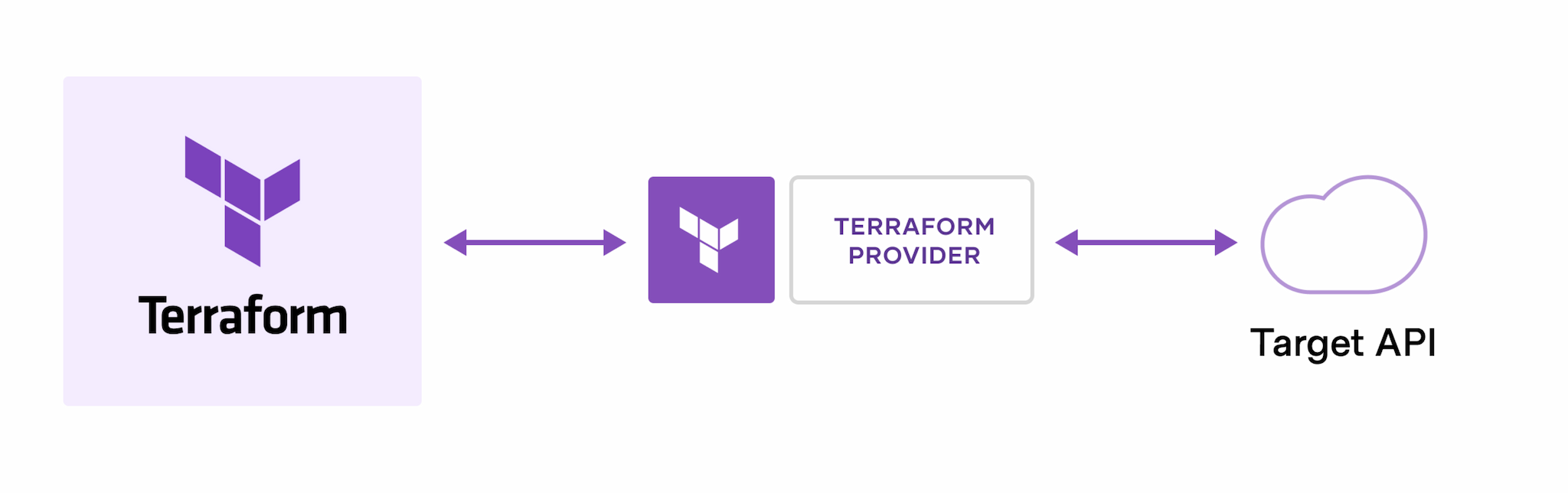
Terraform creates and manages resources on cloud platforms and other services through their application programming interfaces (APIs). Providers enable Terraform to work with virtually any platform or service with an accessible API.
Core Terraform workflow
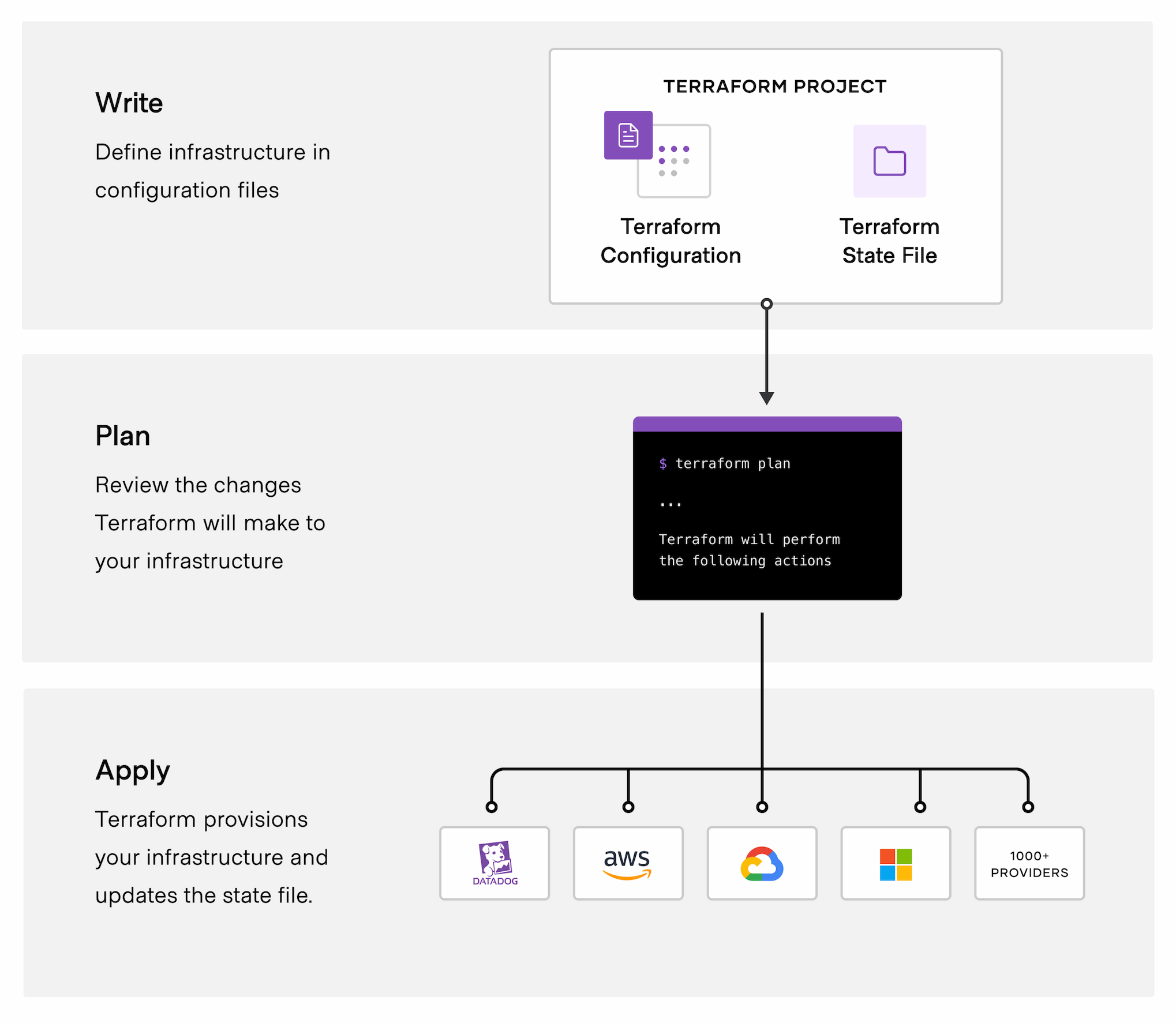
The core Terraform workflow consists of three stages:
- Write — You define resources, which may be across multiple cloud providers and services. For example, you might create a configuration to deploy an application on virtual machines in a Virtual Private Cloud (VPC) network with security groups and a load balancer.
- Plan — Terraform creates an execution plan describing the infrastructure it will create, update, or destroy based on the existing infrastructure and your configuration.
- Apply — On approval, Terraform performs the proposed operations in the correct order, respecting any resource dependencies. For example, if you update the properties of a VPC and change the number of virtual machines in that VPC, Terraform will recreate the VPC before scaling the virtual machines.